
Architectural decorative mesh
Stainless Steel Chainmail Curtain
Custom stainless steel chainmail curtain made from thousands of linked rings for architectural partitions, feature walls, facades and decorative screens.
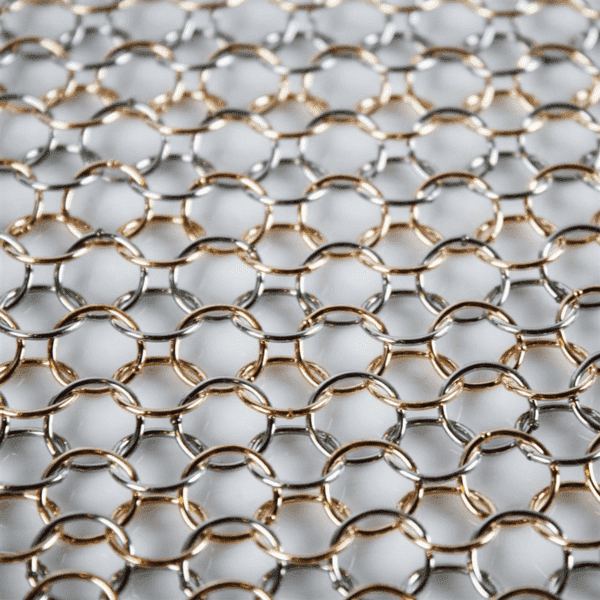
Overview
Why Choose Stainless Steel Chainmail Curtain?
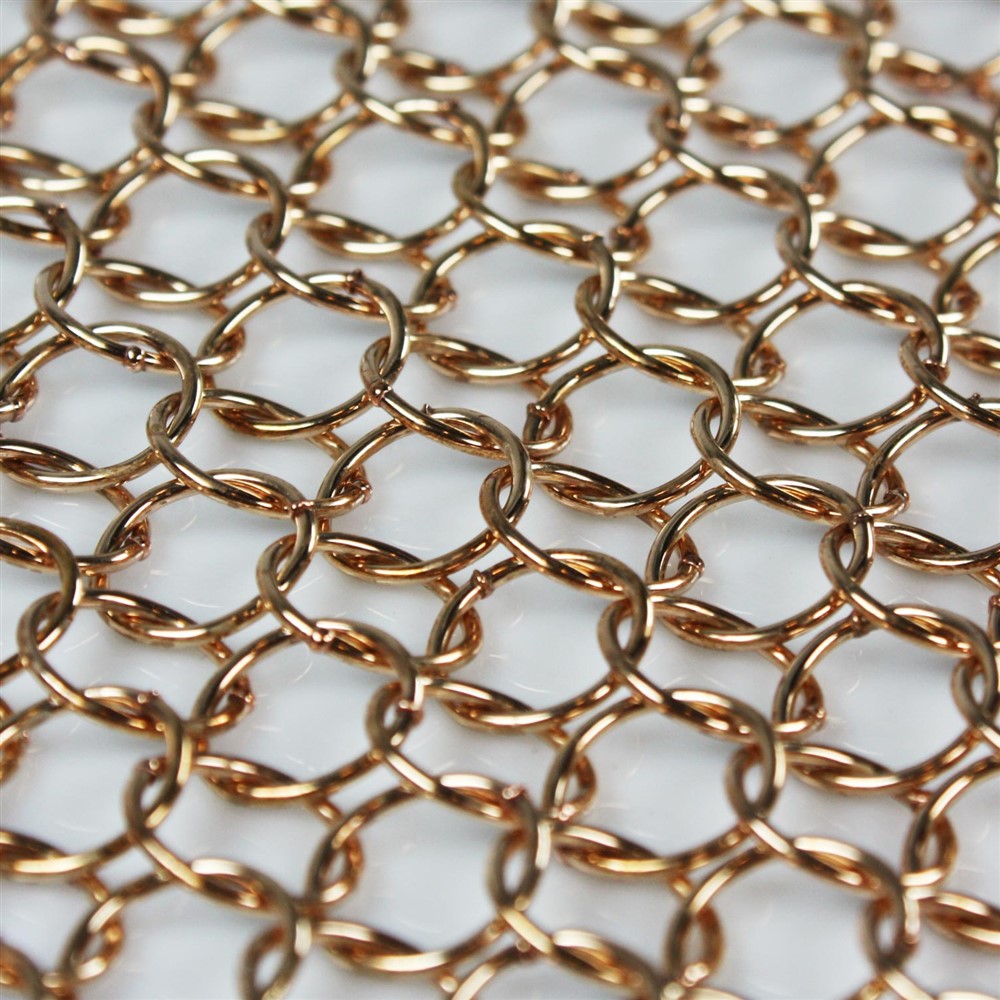
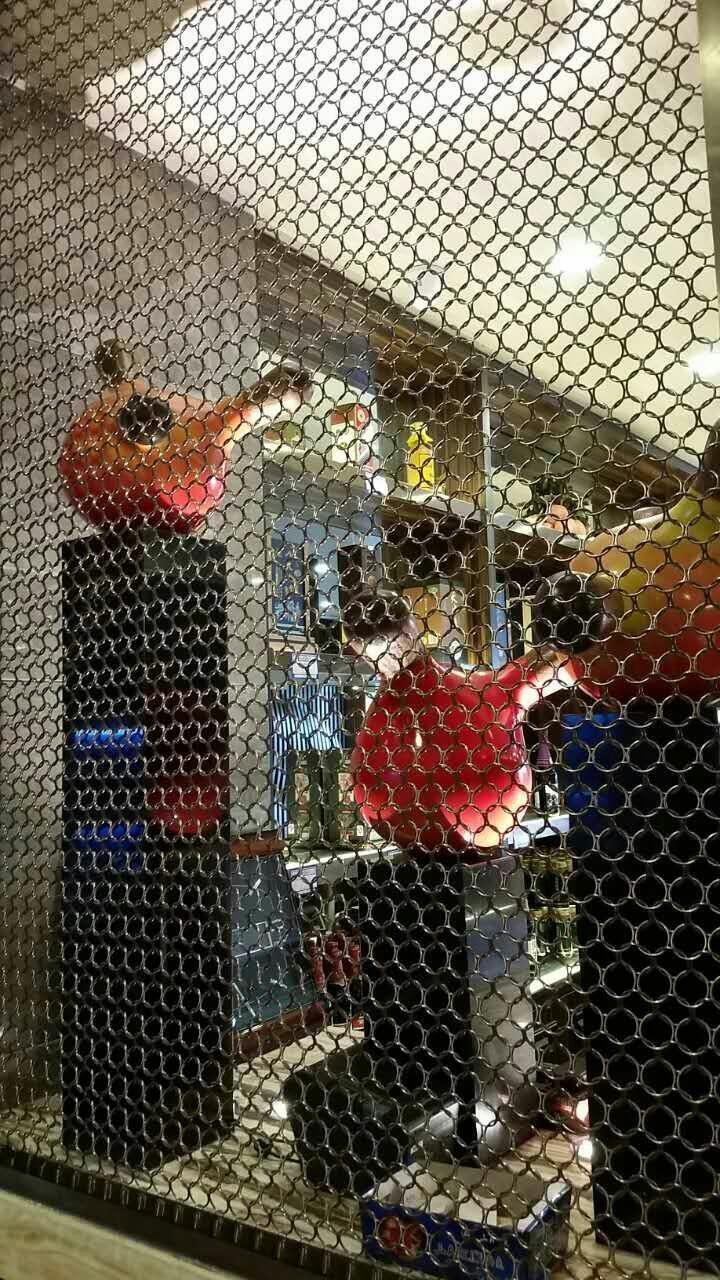
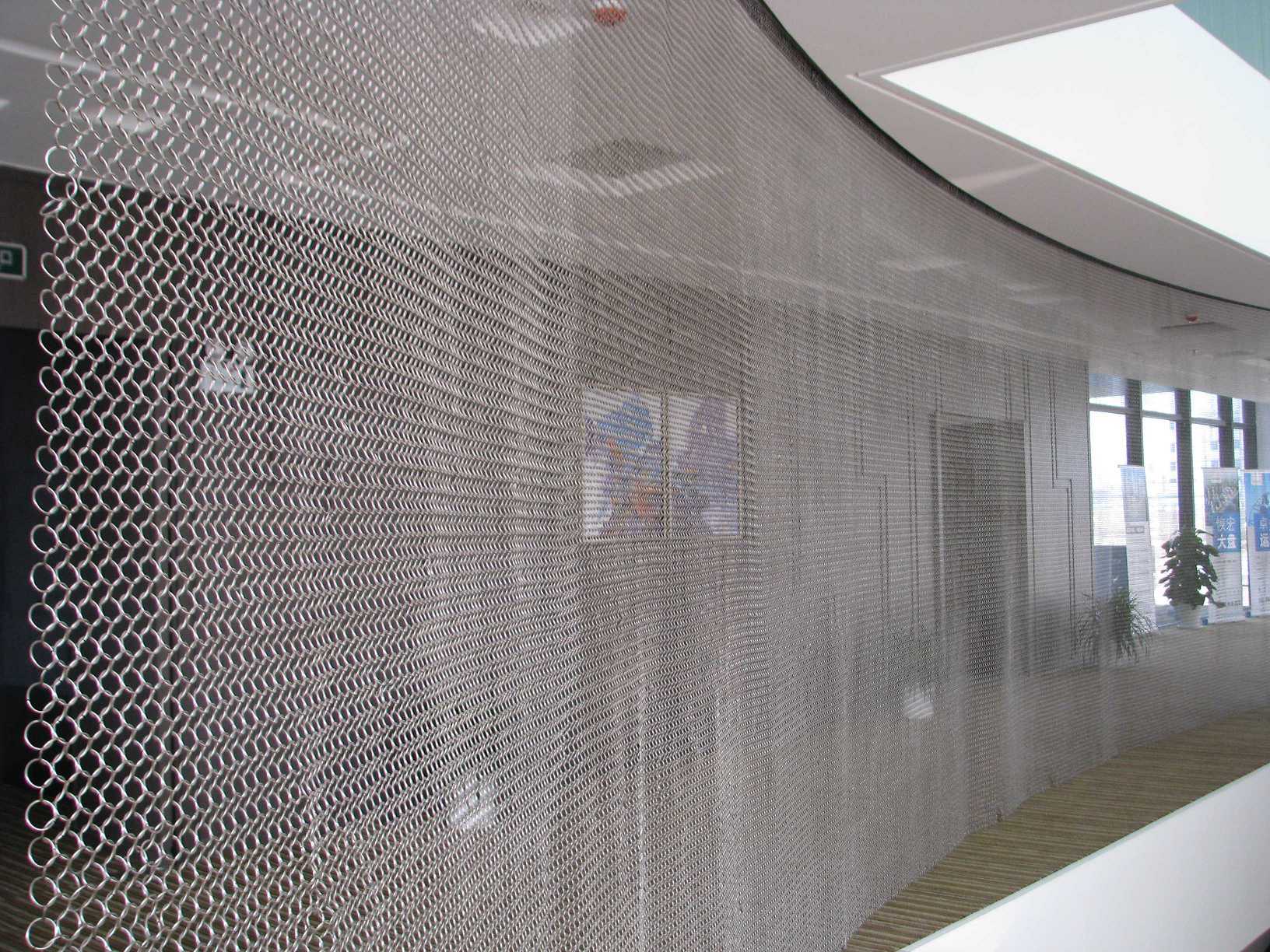
Chainmail Curtain, also called Ring Mesh Curtain or metal ring mesh, is assembled from thousands of individual metal rings linked into a flexible architectural sheet. The circular structure creates a distinctive metallic texture while allowing light, air and partial views to pass through.
Choose welded rings when the panel needs a more secure connection and greater resistance to opening under load, or choose non-welded rings for a lighter-duty decorative solution. Ring diameter, wire diameter, material and connection method are matched to the finished panel size and intended use.
Stainless steel is the most common choice for its clean metallic appearance and practical durability. Copper, brass and bronze provide warmer natural colors, while compatible polishing, matte finishing and project-specific surface treatments can create a wider range of visual effects.
Use ring mesh for interior partitions, feature walls, ceilings, retail and exhibition screens, window treatments and selected exterior installations. Send the panel dimensions, ring size, material, finish, connection method and installation details so we can confirm the mesh weight, support and quotation for your project.
Specification
Chainmail Curtain Ring Sizes, Materials and Custom Options
Use these values to define your initial specification. We confirm the final mesh opening, finish, drop length and installation method against your project drawings before production.
Product overview
Linked Ring Mesh for Flexible Architectural Surfaces
Chainmail Curtain is built from thousands of individual metal rings linked into one flexible architectural sheet. The repeated circular pattern gives designers a clear metallic texture without forming a solid visual barrier.
The mesh can hang flat, follow a curve, drape around a form or divide a space while preserving light, airflow and partial views. Ring size, wire diameter and hanging density control how fine, open and visually substantial the finished curtain appears.
We make each panel to the project dimensions and match the material, ring connection, finish, finished weight and top support before production. This lets the same ring-mesh concept work at product-display scale or across large interior and selected exterior installations.
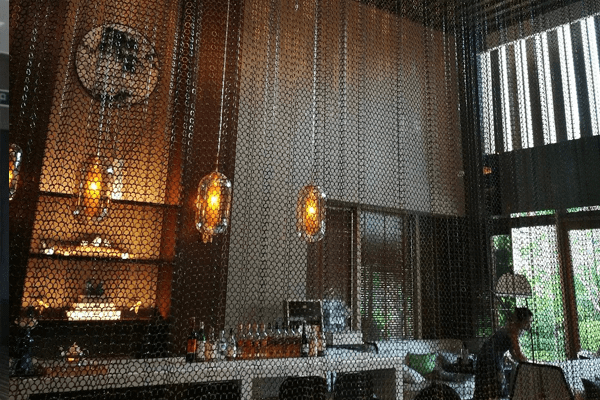
Material selection
Choose Stainless Steel, Copper, Brass or Bronze
Stainless steel 304 or 316 is the most common starting point for architectural ring mesh because it combines a clean silver appearance with practical strength and durability. We confirm the grade against the installation environment and project requirements.
Copper, brass and bronze create naturally warm metal colors for premium interiors and feature surfaces. Carbon steel can be evaluated for cost-sensitive projects when a compatible protective finish and the intended environment allow it.
Material choice changes the color, density, finished weight, maintenance plan and support load. Share the required appearance, indoor or outdoor location, cleaning method and exposure conditions so we can select the ring material as part of the complete panel system.
Size and visual density
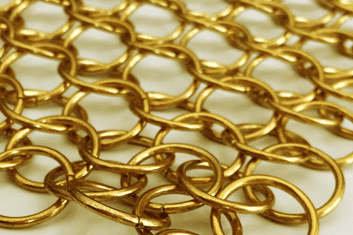
Select the Right Ring Size and Panel Construction
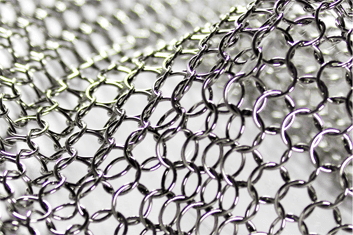
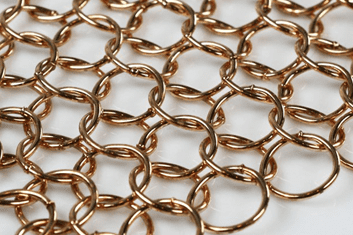
Wire diameter and ring diameter are selected together. Finer combinations such as 0.53 × 3.81 mm create a denser, more delicate surface, while larger combinations such as 2.0 × 20.0 mm create a bolder ring pattern with greater openness.
The selected geometry affects transparency, finished weight, drape and the load transferred to the top support. Common combinations are 0.53 × 3.81, 0.8 × 8.0, 1.0 × 10.0, 1.2 × 12.0 and 2.0 × 20.0 mm; other sizes can be reviewed for custom projects.
Send the finished width, drop, quantity and preferred visual effect. We will confirm whether the panel should remain flexible, use perimeter framing or be divided into manageable sections for production, packing and installation.
- Smaller rings create a finer, denser visual surface
- Larger rings create a bolder, more transparent pattern
- Wire and ring size determine the finished panel weight
- Custom width and drop are checked against support and handling limits
- Large-format panels may require framing or planned panel divisions
Connection methods
Welded or Non-Welded Rings: Which Connection Fits Your Project?
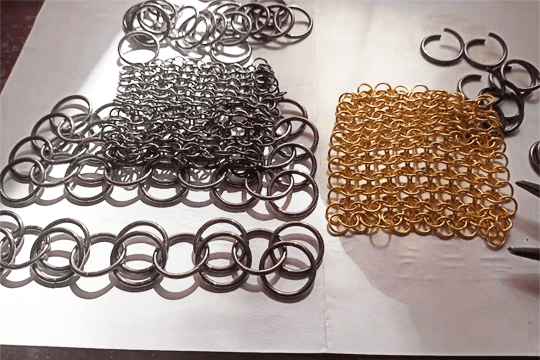
Every panel is assembled by linking the individual rings by hand. The ring opening can remain mechanically closed without welding, or each connection can be welded after assembly for a more secure structure.
Non-welded rings are generally suited to decorative, lighter-duty applications where the lower-processing option meets the panel load and expected movement. Welded rings require more manual work but help the mesh carry greater self-weight and resist ring opening under higher loads.
The connection cannot be selected by price alone. We confirm it with the material, ring size, panel dimensions, hanging method, movement and any project-specific load or safety requirement.
- Non-welded: lower processing cost for suitable decorative uses
- Welded: more secure ring closure for higher panel loads
- Both constructions are assembled by hand
- Final selection depends on panel weight, movement and support design
Color and finish
Natural Metal Colors, Polished and Matte Finishes
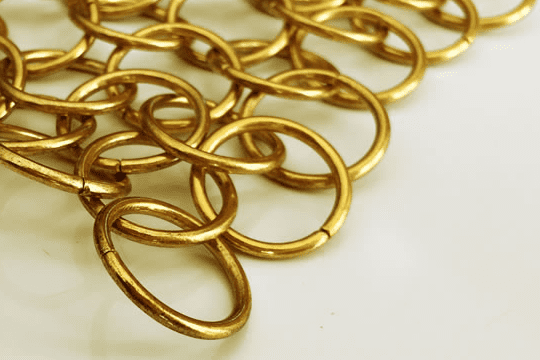
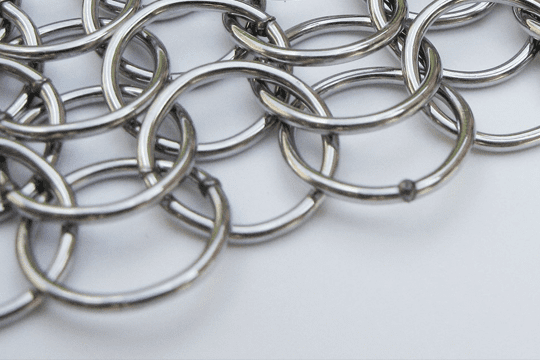
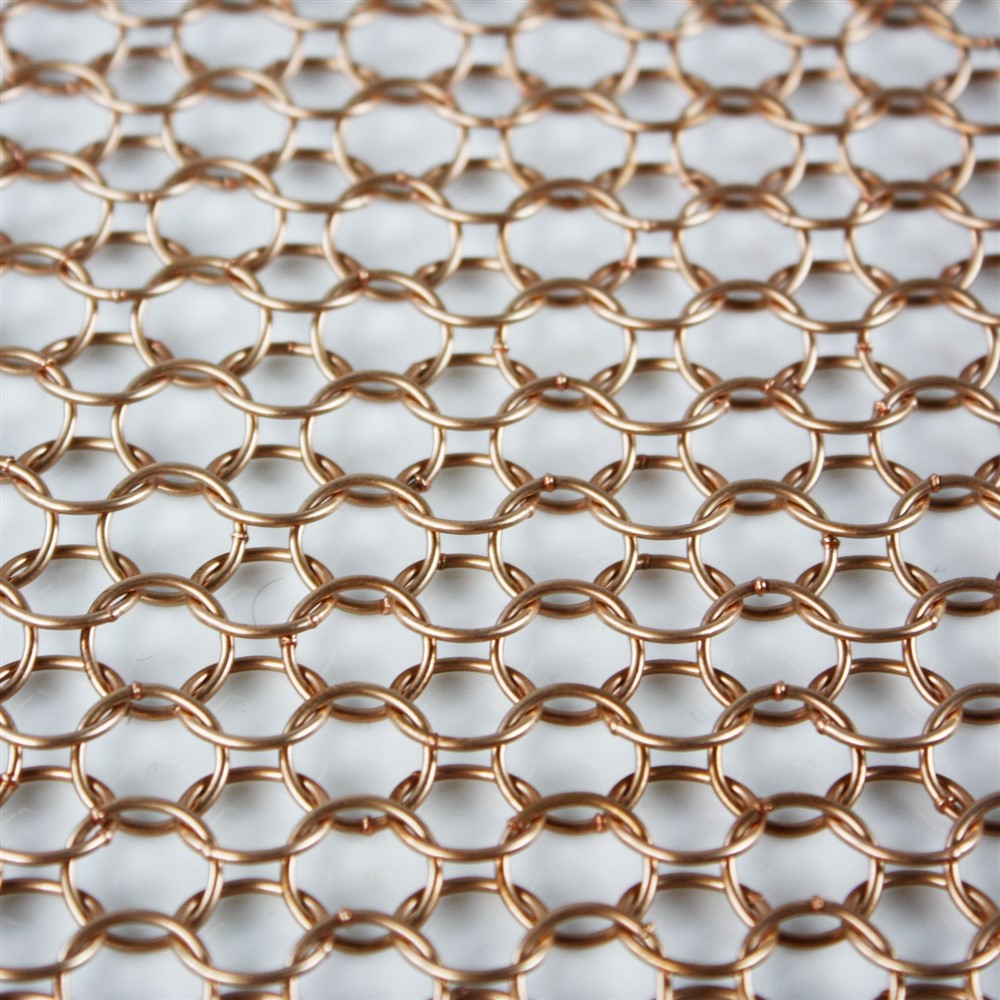
Natural metal color is the most direct way to define a ring-mesh curtain. Stainless steel gives a cool silver surface, while copper, brass and bronze create warmer red, gold and brown tones without hiding the character of the base material.
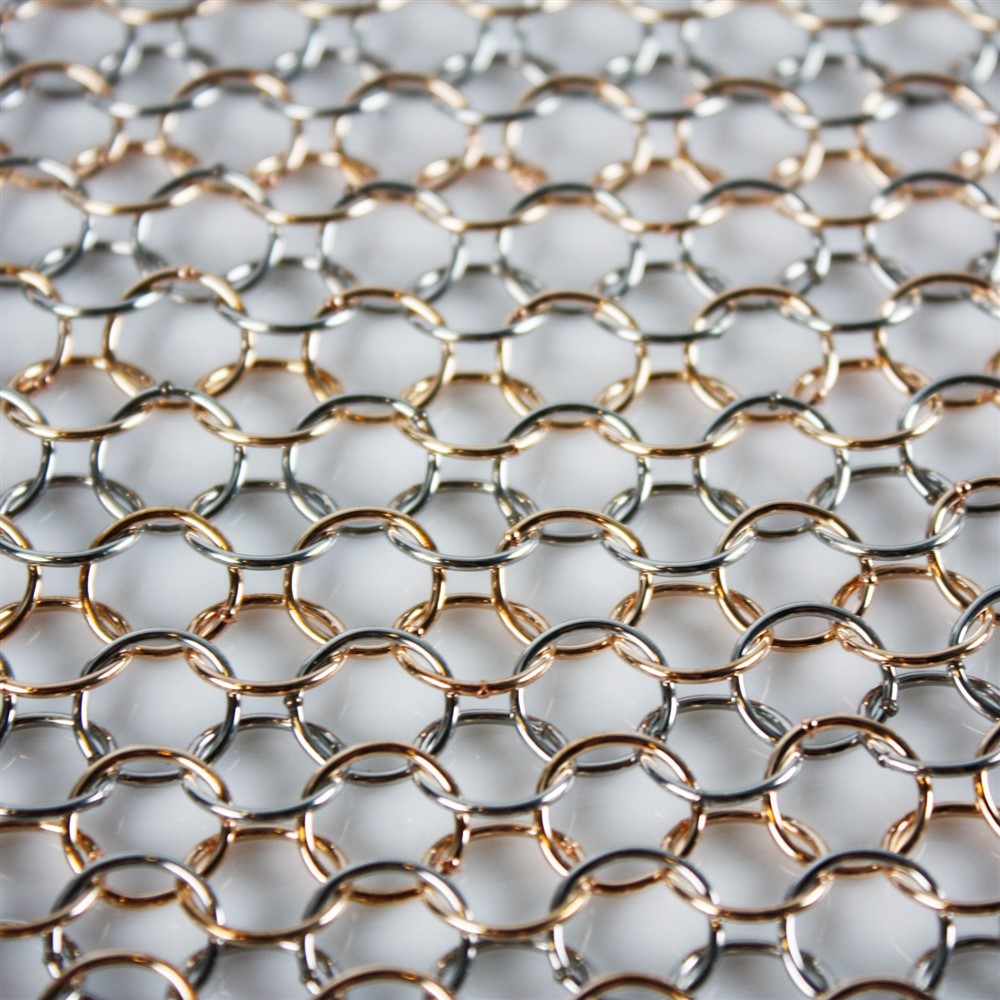
Polishing increases gloss and reflected light; matte finishing creates a quieter, softer surface. Stainless steel can also be combined with copper or bronze rings to produce a bicolor mesh with greater depth and contrast.
Compatible titanizing, chroming, galvanizing or color coating can be evaluated when the design requires a color beyond the natural metal range. The available process depends on the selected substrate, environment and performance requirements, so color-critical projects should approve a physical sample before production.
Choose the right structure
Compare Chainmail Curtain, Coil Drapery and Chain Link Curtain
Chainmail Curtain, Metal Coil Drapery and Aluminum Chain Link Curtain can all divide or decorate a space, but they are not interchangeable products. Their construction determines the texture, movement, weight and installation system.
Choose Chainmail Curtain when the visible circular-ring pattern and substantial metal character are central to the design. Choose Metal Coil Drapery for a continuous corrugated sheet that gathers like fabric, or Aluminum Chain Link Curtain for lightweight vertical strands, easy walk-through movement and colorful graphic patterns.
| Product | Construction | Typical material | Appearance and movement |
|---|---|---|---|
| Chainmail Curtain | Individual circular rings linked into a flexible sheet | Stainless steel, copper, brass, bronze or steel | Visible ring texture with substantial drape; welded or non-welded connections |
| Metal Coil Drapery | Interlocking wire spirals woven into one continuous sheet | Aluminum, stainless steel and other project-specific metals | Continuous corrugated surface that gathers and flows like drapery |
| Aluminum Chain Link Curtain | Separate hook-shaped links connected into vertical strands | Aluminum | Lightweight open strands that move independently and can form color graphics |
Design applications
From Interior Partitions to Sculptural Facades
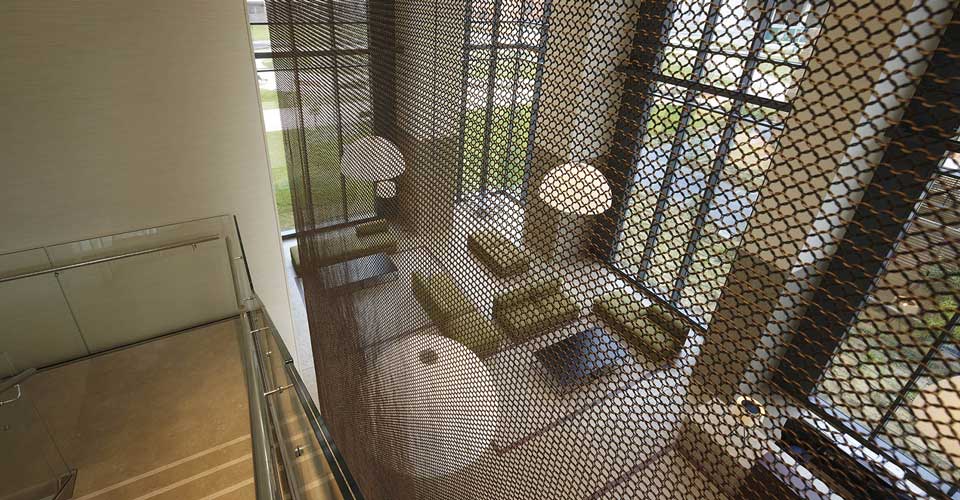
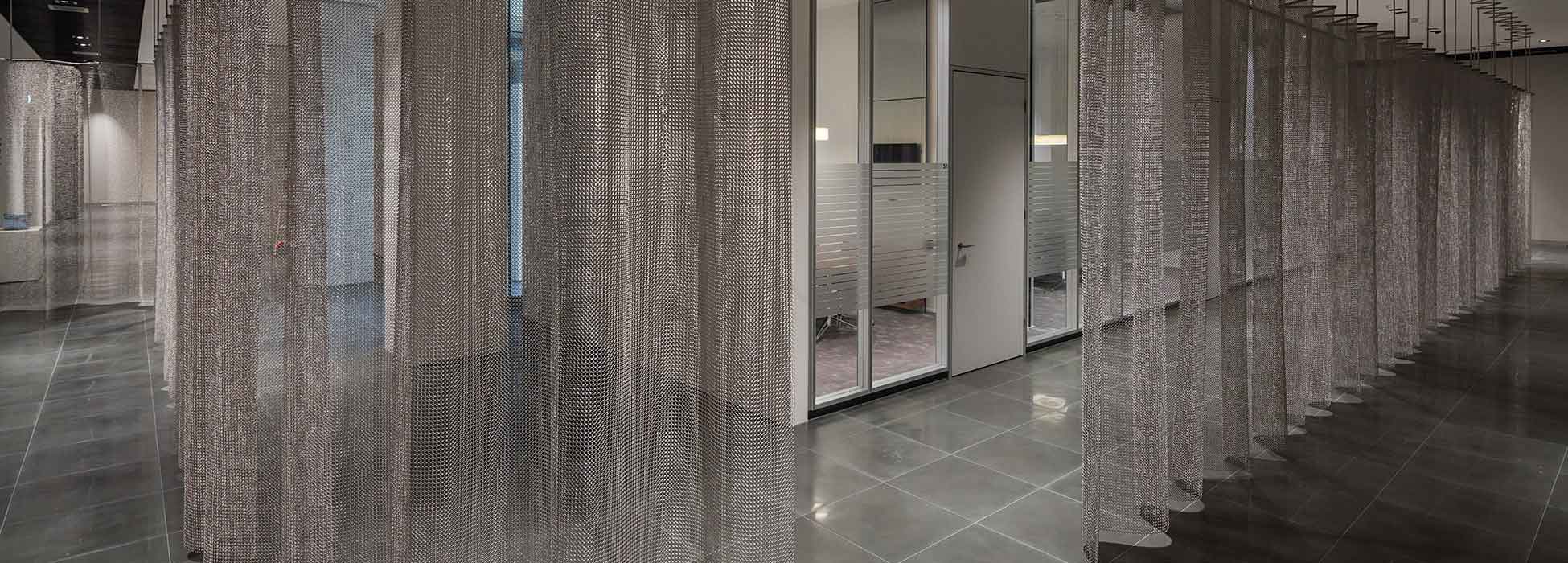
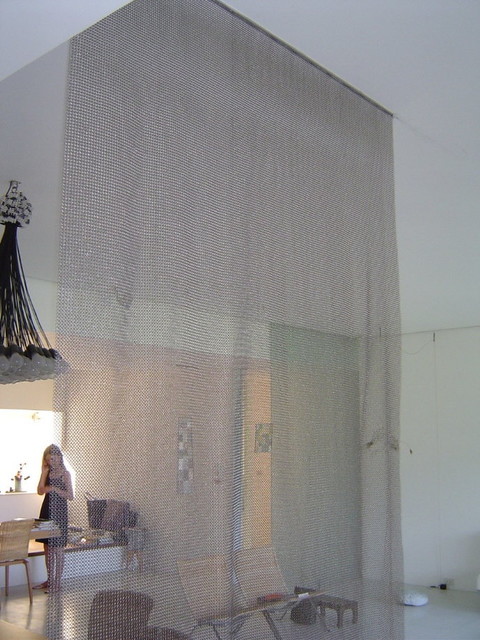
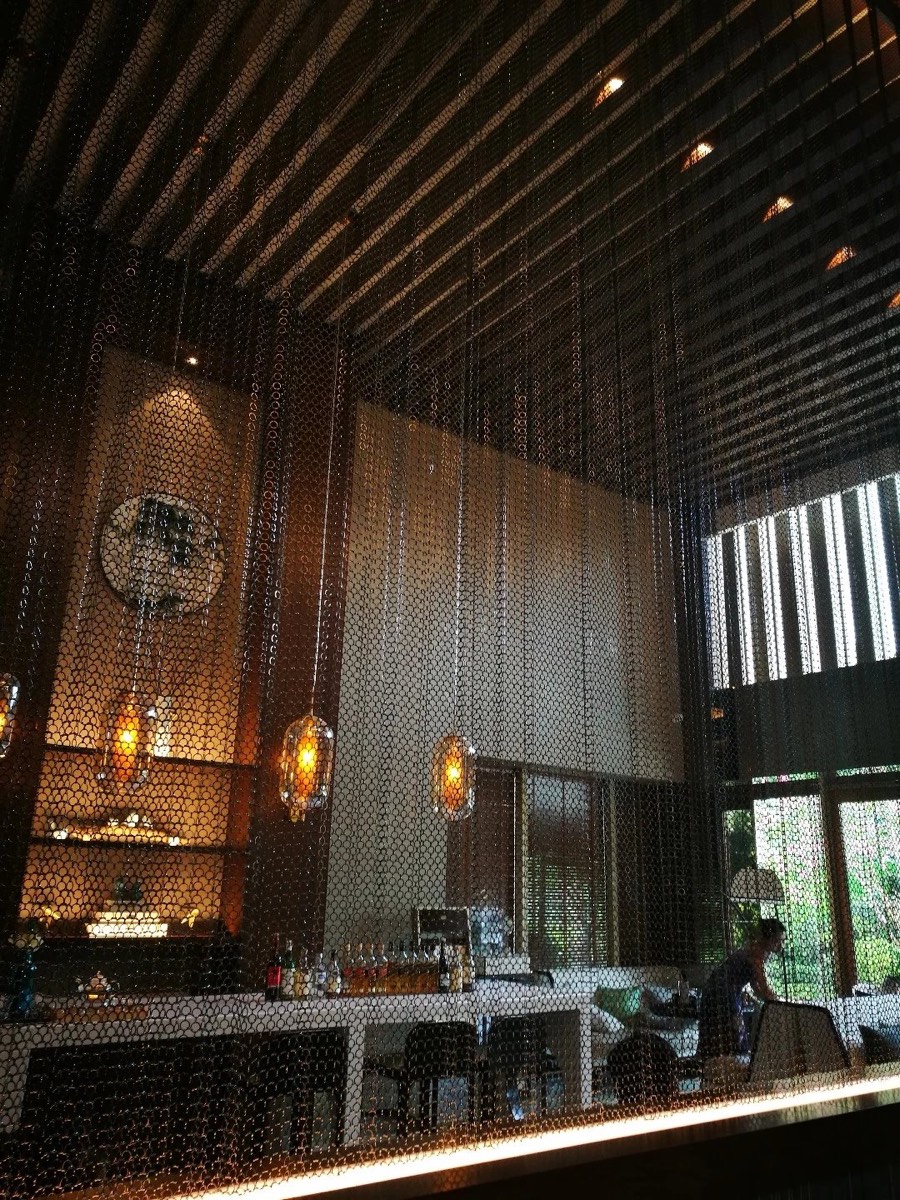
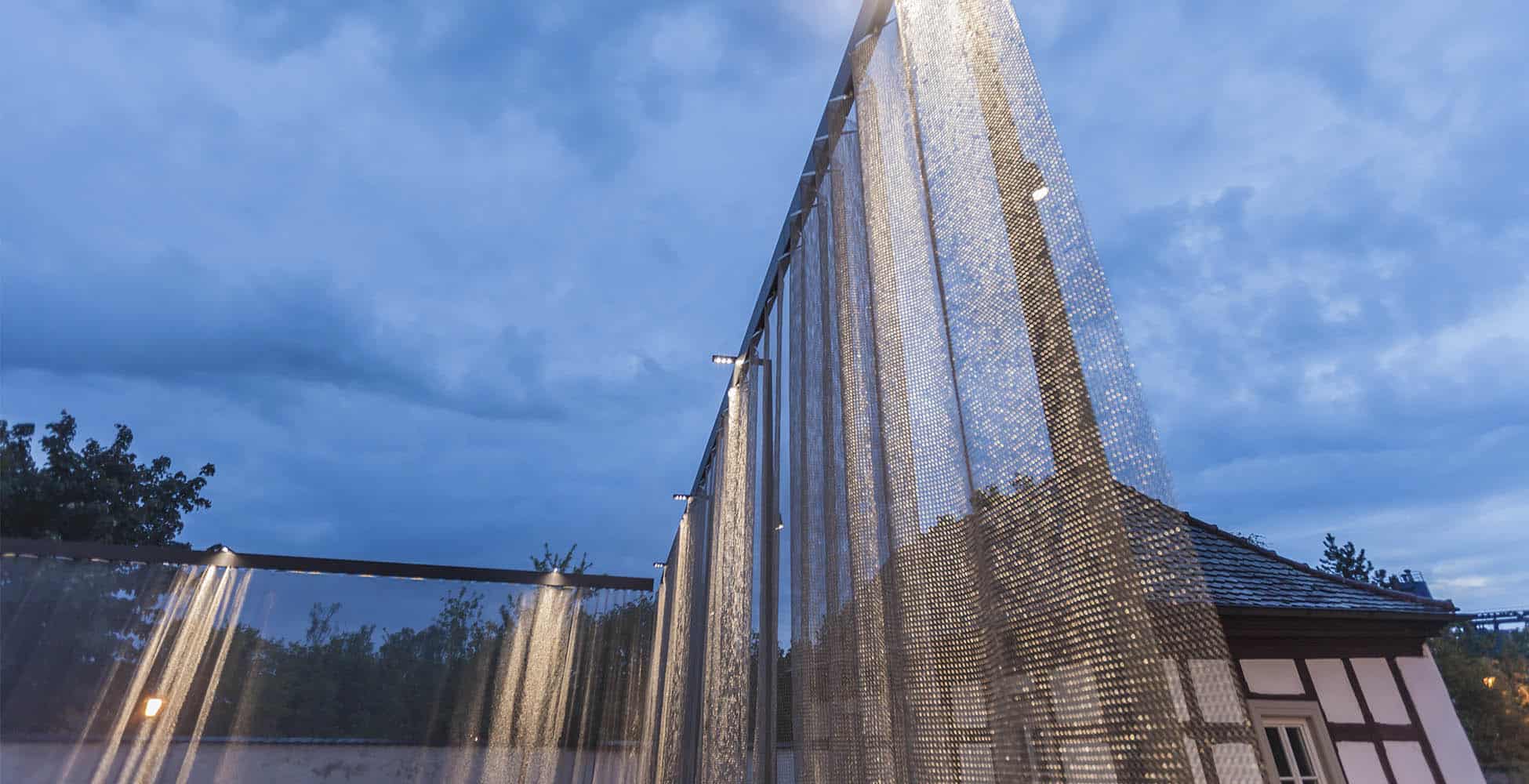
Use Chainmail Curtain where a project needs visual separation, metallic texture and openness in one material. The mesh can form a straight partition, follow a curved path or hang as a tall sculptural surface while keeping light and views moving through the space.
Typical projects include hotel, restaurant, office and retail interiors, exhibition displays, feature walls, staircase screens, ceilings, window treatments and background decoration. The linked-ring surface also creates distinctive shadows and reflections under architectural lighting.
Exterior, overhead, fireplace, fly-screen, fence-infill or security-related concepts require additional review. We match the material, ring connection, finished weight, support, fixings and any required testing to the intended environment before confirming the solution.
- Interior partitions and flexible background screens
- Hotel, restaurant, office and retail feature surfaces
- Exhibition, shopfitting and display enclosures
- Curved dividers, staircase screens and ceiling features
- Window treatments and decorative door curtains
- Selected facade and exterior screens after wind and support review
- Performance-critical concepts only after material, fixing and test review
Ordering options
Flexible MOQ, Samples and Project Lead Times
Orders can start from 1 m² for eligible materials, ring sizes, finishes and connection methods. Custom-size and custom-finish samples can be reviewed before a larger project order.
When the selected material and finish are available, eligible orders may take about 2 days for 1 m² and within 7 days for 10 m². Welded construction, special materials, coatings, large panels or complex support requirements can change the schedule.
Send the complete specification to receive current sample terms, production capacity and a confirmed lead time with the quotation.
Packing and shipping
Export Packing for Linked Ring Mesh Panels
Ring-mesh panels are protected with sealed plastic, waterproof paper or plastic film, then placed in cartons or wooden cases selected for the panel size, weight and transport route.
We plan the fold or roll direction to limit tangling, abrasion and permanent creasing. Multiple panels, frames and support components are labeled so installers can identify the intended sequence on site.
Before shipment, we confirm panel marks, inner protection, crate dimensions, gross weight, handling points and loading method with the order.
- Protect the mesh with sealed plastic or waterproof inner wrapping
- Use cartons or wooden cases to suit panel size and weight
- Plan fold or roll direction to reduce tangling and abrasion
- Label panels, frames and support components for installation
- Confirm crate size, gross weight and loading method before shipment
Performance
Key Features
The main performance and design characteristics of Ring Mesh Curtain include:
- Linked circular rings create a recognizable chainmail texture and fluid drape
- Welded and non-welded connections suit different structural and budget priorities
- Ring and wire sizes can be matched to the required openness, weight and visual scale
- Stainless steel, copper, brass and bronze provide distinct natural metal appearances
- Polished, matte, bicolor and compatible coated finishes support different design directions
- Open construction allows light, air and partial views to pass through the curtain
- Custom widths, drops and shaped panels can be developed around the project drawings
- Material, panel weight, top support and fixings are confirmed as one complete system
Buying FAQ
Frequently Asked Questions About Ring Mesh Curtain
Is Chainmail Curtain the same as Metal Coil Drapery or Aluminum Chain Link Curtain?+
No. Chainmail Curtain is assembled from individual circular rings linked into a sheet. Metal Coil Drapery is woven from continuous wire spirals, while Aluminum Chain Link Curtain uses hook-shaped links arranged in vertical strands. Their texture, weight, movement and support requirements are different.
Which material should I choose for Ring Mesh Curtain?+
Stainless steel is the most common option for a clean metallic appearance and practical durability. Copper, brass and bronze provide warmer natural colors, while carbon steel may suit cost-sensitive indoor applications with a compatible finish. Share the installation environment, cleaning method and target appearance so we can confirm the material.
How do I choose the ring and wire size?+
Smaller rings create a finer, denser surface; larger rings create a bolder and more open texture. The wire and ring dimensions also change the panel weight and support load. Send the finished width, drop, application and preferred visual effect so we can recommend a suitable combination.
Should I choose welded or non-welded rings?+
Non-welded rings are often suitable for decorative, lighter-duty uses and generally require less manual processing. Welded rings provide a more secure connection where the panel must carry greater self-weight or resist ring opening. The final choice depends on panel size, load, movement and installation.
Can Chainmail Curtain be made in copper, brass, bronze or bicolor finishes?+
Yes. Natural copper, brass and bronze provide warm metallic colors, and stainless steel can be combined with copper or bronze for a bicolor effect. Polished, matte and compatible coated finishes are also available by material. Approve a physical sample before production when color and gloss are critical.
What size can a Ring Mesh Curtain panel be?+
Width is customized to the project. Drops up to 6 m are a common design reference, but the practical panel size depends on ring construction, finished weight, top support, movement, handling and installation access. Large panels may need to be divided or framed after engineering review.
What are the MOQ, sample and lead-time terms?+
MOQ starts from 1 m² for eligible material, ring size, finish and connection combinations. Custom samples may be available. When the selected material and finish are available, eligible orders may take about 2 days for 1 m² and within 7 days for 10 m². We confirm current terms and capacity with the quotation.
Is Chainmail Curtain fireproof, corrosion-proof or suitable for exterior and security use?+
Those properties cannot be assumed from the product name alone. Fire, heat, corrosion, wind, impact and security performance depend on material, ring construction, finish, panel size, support design and verified testing. Send the project requirements for a material and engineering review before specifying performance-critical use.
Related products
Compare nearby mesh options
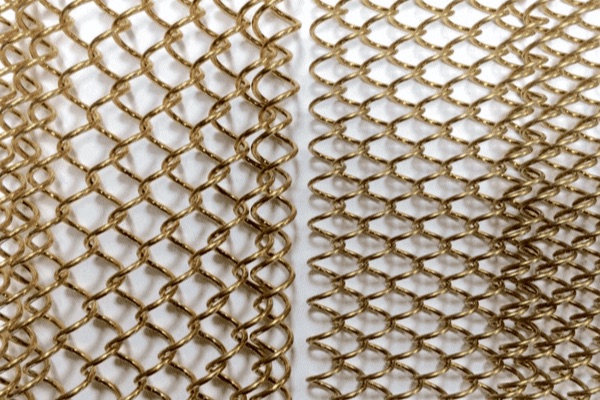
Metal Chain Curtain
We supply custom metal chain curtain—also called metal wire mesh curtain, metal coil drapery or chain mesh curtain—for architectural dividers, ceilings, screens and decorative projects.
View specifications →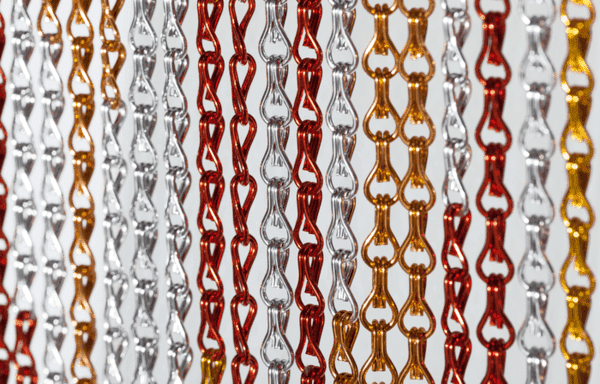
Chain Link Curtain
Lightweight anodized aluminum chain curtains made to your size, color and pattern for walk-through doors, space dividers and branded displays.
View specifications →
Spiral Weave Mesh
Born on the assembly line, adopted by architects — tough spiral-and-rod mesh for dividers, facades, ceilings and guardrails.
View specifications →